How to Care for Bagged, Boarded, and Slabbed Comics at Home
Caring for comics at home is mostly about preventing avoidable damage: heat, humidity, light, pressure, bending, oils from hands, and rushed handling. Bagging, boarding, and slabbing all help, but none of them replace a stable storage space and a simple inspection routine.
TL;DR: Keep comics cool, dry, dark, upright, and lightly supported. Use archival-quality bags and boards for raw books, avoid tight boxes, do not stack heavy slabs, and inspect the collection every few months for moisture, warping, pests, cracked cases, or overstuffed storage.
Start With What Each Protection Method Actually Does
A bag protects a comic from dust, fingerprints, surface scuffs, and casual handling. A board adds stiffness so the book does not flex every time it is moved. A slab, usually a hard third-party grading case, protects a certified comic from direct handling and makes its condition easier to communicate. None of these systems makes a comic indestructible.
The Library of Congress guidance on comic book care emphasizes preventive handling and storage because many comics, especially older newsprint issues, are chemically unstable. That means the goal is not to make paper immortal. The goal is to slow damage by controlling the environment and reducing physical stress.
Readers who are also comparing formats may find it useful to think about protection differently from reading preference. A collector copy needs stricter care than a casual reader copy, just as single issues, trade paperbacks, and deluxe editions serve different reading habits.
Choose Better Materials Before You Rebag Everything
For raw comics, use bags made for comic storage rather than general plastic sleeves. Polypropylene and polyethylene are common budget choices for shorter-term storage, while polyester film is often preferred for long-term archival enclosures. Avoid PVC and bargain sleeves that smell strongly of plastic. Use acid-free, buffered backing boards sized for the comic era: golden age, silver age, current, magazine, or treasury. A board that is too wide can press the cover; one that is too narrow can allow edge curling.
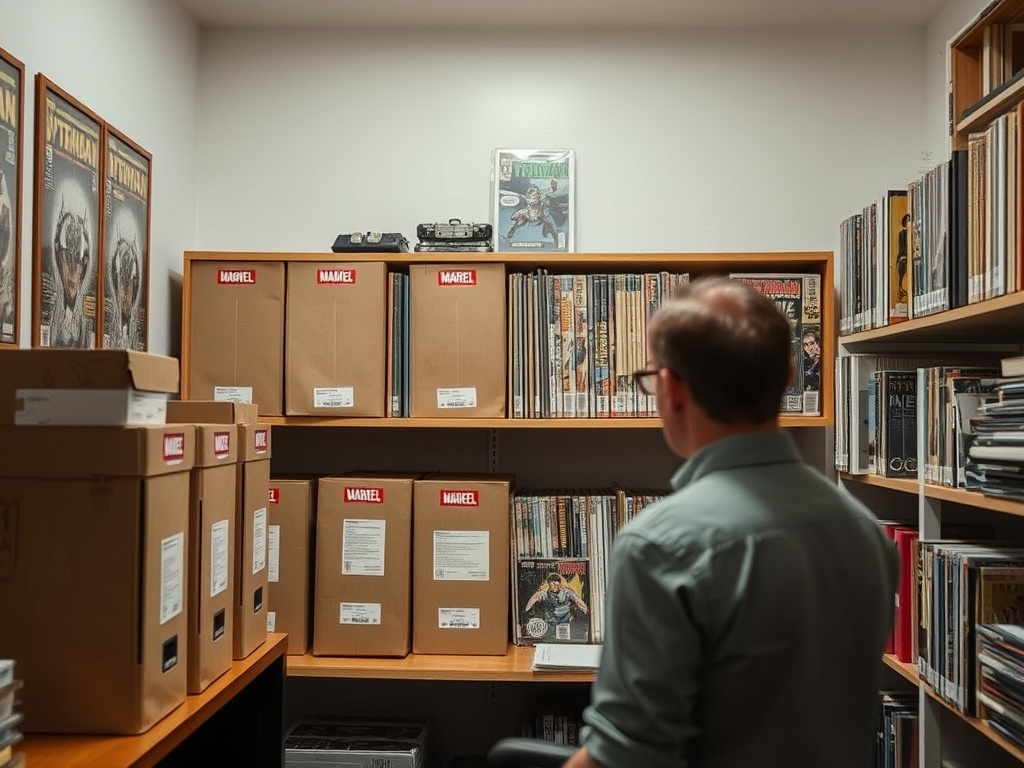
Boxes matter as much as sleeves. A comic box should hold books upright without forcing them into a tight block. Leave a small amount of space so books can be removed without dragging covers against neighboring bags. Use an inert divider or backing support if the box is not full. Never use rubber bands, tape near the opening, or makeshift clips that can press into the comic.
For slabbed comics, use boxes designed for graded cases. Slabs are rigid, but corners can crack, labels can scuff, and heavy vertical pressure can stress the case. A slab should not be treated like a brick.
Set Up the Storage Space Before Sorting
A good storage room is boring: steady temperature, moderate humidity, low light, no plumbing risk, and no extreme seasonal swings. Bedrooms, closets inside the main living area, or finished interior rooms are usually better than attics, garages, basements, sheds, or storage units without climate control. Preservation groups such as the Northeast Document Conservation Center explain why heat, moisture, light, and poor air quality accelerate paper deterioration.
Do not place boxes directly on concrete floors or under windows. Use shelving that can handle the weight and leaves airflow around the boxes. If you use plastic bins, avoid sealing damp air inside. If you use cardboard boxes, keep them away from moisture and replace soft, warped, or stained boxes immediately.
A Step-by-Step Care Routine for Raw Comics
- Wash and fully dry your hands before handling. Cotton gloves are not always helpful for comics because they reduce touch sensitivity and can catch edges; clean dry hands are often safer.
- Clear a table and remove drinks, pens, tape, food, candles, and pets from the work area.
- Inspect one comic at a time. Look for loose staples, spine splits, moisture spots, insect activity, tape residue, brittle edges, or cover separation.
- Slide the comic into the bag with the board behind it. Do not push against corners. If it resists, stop and check the size.
- Close the flap without taping close to the book. If you use tape, place it on the outside flap only and keep the comic far away while opening and closing.
- Store the comic upright in a box with even support. Avoid a leaning row because repeated lean can produce spine roll.
- Update a simple inventory with title, issue number, variant notes, condition notes, storage box, and date rebagged.
A basic spreadsheet is enough for most home collections. The point is not just value tracking. It helps you avoid unnecessary handling when you need to find a book.
How to Handle Slabbed Comics Without Creating New Problems
Slabbed comics should be carried with two hands and stored vertically in cases or boxes that fit the slab size. Do not stack tall piles of slabs flat, especially near heat or direct sun. Keep slabs away from hard shelf edges where one fall can crack a corner.
If a case is scratched, that may be cosmetic. If it is cracked, separating, cloudy inside, or showing signs of moisture, treat it as a higher-risk object and contact the grading company or a qualified comic preserver before attempting anything. Do not pry a slab open just to “check” a comic. The moment you break the case, the certification and protection are affected.
Collectors interested in preservation across visual storytelling formats may also enjoy Stop-Motion vs CG vs Hybrid Animation: What Each Format Does Best because both topics show how materials and technique shape the final experience.
Common Mistakes That Quietly Damage Comics
The most common mistake is overprotection without environmental control. A fresh bag cannot undo an attic heat cycle. The second is storing boxes too tightly. Compression creates stress and makes every removal risky. The third is using the wrong size supplies. Modern bags do not fit many older comics safely. The fourth is letting display turn into damage. UV light can fade covers even when the comic is bagged.
Another mistake is treating high value and high sentiment the same way. A childhood comic with low market value may deserve a better enclosure because it cannot be replaced emotionally. A valuable comic, by contrast, may need professional advice because one amateur repair can reduce value.
| Situation | Best home response | When to get help |
|---|---|---|
| Slightly bent modern comic | Rebag, board correctly, store upright with support | If pressing is being considered for resale |
| Damp smell or visible moisture | Isolate immediately in a dry space | If mold, staining, or pages sticking appear |
| Cracked slab | Store flat temporarily and prevent flex | If the case is open, cloudy, or contaminated |
| Brittle old paper | Minimize handling and keep stable | If pages flake or covers detach |
How Often to Inspect and Replace Supplies
Check active boxes every three to six months, especially after weather changes, leaks, moves, or long periods of high humidity. You do not need to open every comic each time. Look for box softness, odor, discoloration, warped bags, pests, and leaning rows. Rotate boxes from hard-to-reach shelves so hidden problems do not go unnoticed.
Replace boards that yellow, smell acidic, bow, or no longer fit. Replace bags that become cloudy, wrinkled, sticky, or brittle. If your collection is growing, upgrade storage before you run out of room. Crowded storage causes more damage than imperfect but roomy storage.
A Practical Standard for “Good Enough” Care
You are doing well if comics are easy to retrieve, not compressed, not leaning, not exposed to sunlight, and stored in a space where you would be comfortable keeping important paper documents. For most collectors, the best routine is consistent and calm: handle less, store better, inspect regularly, and document changes.
Finish by choosing one box this week, checking its fit and environment, and creating a rebagging list. That small habit will protect more comics than a one-time supply binge.