
How to Garden With Fewer Synthetic Chemicals
A garden can rely less on synthetic chemicals when plant health, pest prevention, accurate diagnosis, and targeted intervention are handled in that order. The goal is to make chemical treatment a last, specific tool rather than the default response.
TL;DR: Build healthy soil, match plants to the site, inspect often, identify the real problem, use physical and biological controls first, and apply any pesticide only when the need is clear and the product is appropriate for that pest and location.
Start with the garden conditions pests exploit
Reducing chemical use begins before an insect, disease, or weed becomes a problem. Stressed plants are often less resilient, while overcrowding, poor drainage, repeated monoculture, and excessive nitrogen can create conditions that favor pests or disease. Check sunlight, drainage, watering habits, air movement, mulch depth, and plant spacing. If a vegetable bed stays wet for days after irrigation, improving drainage or changing the watering schedule may be more useful than reaching for a fungicide. If a plant repeatedly struggles in deep shade, replacing it with a species suited to that exposure may remove the problem altogether.
The EPA's integrated pest management guidance follows this same logic: identify and monitor pests, set an action threshold, prevent problems, and then choose the lowest-risk effective control when action is justified. That makes IPM a useful framework for anyone trying to garden without synthetic chemicals as the first line of defense.
Gather a small low-input garden kit
You do not need a specialty shed full of products. A practical kit can be simple:
- hand pruners and a clean pair of scissors for removing damaged material;
- a hand weeder or hori-hori for targeted weed removal;
- a hose nozzle or gentle sprayer for dislodging some soft-bodied insects;
- gloves and a small bucket for hand-picking pests;
- mulch appropriate to the crop and climate;
- a phone or notebook for recording symptoms, timing, and weather;
- access to a local Extension or reliable pest-identification resource.
For seedling production, using a soil blocker for seed starting is one reusable propagation option that can reduce reliance on individual plastic cells.
Step 1: Identify the problem before treating it
A chewed leaf does not automatically mean a harmful insect needs control. Holes can come from caterpillars, beetles, slugs, leaf miners, wind injury, hail, or simple mechanical damage. Yellowing can come from nutrient imbalance, root stress, excess water, drought, disease, or natural aging. Treatment without diagnosis wastes time and may harm organisms that were never causing the problem.
Inspect both sides of leaves, stems, the soil surface, and nearby plants. Look for patterns: Is damage concentrated on one species? Is it worse on lower leaves? Did it appear after a weather shift? Are insects present, and if so, are they actually feeding? Photograph the symptom and the whole plant, not just one leaf. When uncertain, use a state Extension diagnostic service or another credible local resource before applying anything.
This is also the point to decide whether action is needed at all. A few imperfect leaves on a vigorous plant may be acceptable. A pest that is rapidly stripping seedlings or spreading disease may justify quicker control. That threshold will differ by crop, season, and the gardener's tolerance.
Step 2: Make prevention do more of the work
Preventive practices usually have the best long-term return because they change the conditions that allowed a problem to build. Rotate annual crops when space allows. Remove badly diseased plant material instead of composting it when the disease may persist in the pile. Water at the soil line when practical so foliage does not stay wet longer than necessary. Space plants for airflow and avoid repeatedly placing the same crop family in the same small bed.
Mulch can suppress many annual weeds, moderate soil moisture, and reduce soil splash onto leaves. Compost can improve soil structure and water-holding behavior when used appropriately. Resistant cultivars can also reduce pressure from recurring diseases, although resistance is usually specific rather than universal.
For broader design decisions, a lower-input yard often becomes easier to manage when plant selection fits the climate and site. The same principle applies to winter preparation and household systems: prevention works best when it is planned before a problem becomes urgent, much like knowing how to shut off water and gas in an emergency before a leak occurs.
Step 3: Use physical and biological controls first
Many garden problems can be reduced with direct action. Hand-pull weeds before they set seed. Prune a small infected branch when the disease is localized and pruning is appropriate for that plant. Use row covers before a known pest arrives, while still accounting for pollination needs. Hand-pick larger insects. Use barriers around seedlings where a specific crawling pest is a predictable issue.
Biological control is broader than buying beneficial insects. It also means creating conditions that support predators and parasitoids already present. Diverse flowering plants can provide nectar and habitat for beneficial insects, while avoiding unnecessary broad-spectrum treatments helps preserve them. The result is not a pest-free garden. It is a garden where pest populations are less likely to require constant intervention.
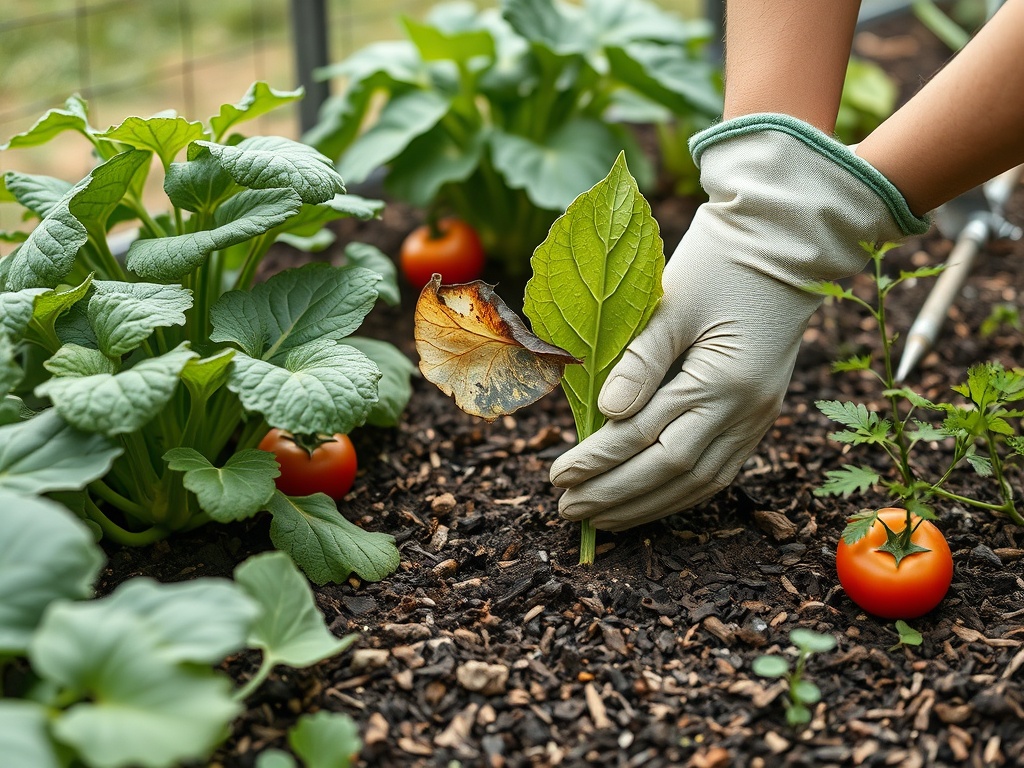
Step 4: If a product is needed choose it narrowly
Using fewer synthetic chemicals does not require pretending every pesticide is unnecessary. Some infestations, invasive pests, or disease situations may warrant treatment. The key is to choose a product for a clearly identified problem and to use it exactly as the label directs.
A product described as natural, organic, botanical, or homemade is not automatically harmless. Some naturally derived substances can irritate skin, harm aquatic organisms, damage plants at the wrong concentration, or affect beneficial insects. Treat the label as the controlling instruction for legal use, rate, protective equipment, re-entry time, and where the product may be applied.
The EPA's lawn and garden pesticide guidance emphasizes that pesticides are not the only option and that safer use depends on selecting and applying them correctly. If a lower-risk targeted treatment can solve the problem, broad routine spraying is hard to justify.
Troubleshoot the reasons low-chemical gardens still struggle
If pests keep returning, look for the underlying pattern rather than escalating products.
Recurring aphids: check whether tender new growth is being pushed by heavy fertilization and whether natural predators are present before treating.
Persistent fungal symptoms: review spacing, irrigation timing, splash from soil, sanitation, and whether the plant is suited to the site.
Weeds returning after pulling: identify whether they are annuals reseeding from the surface or perennials resprouting from roots. The control approach differs.
Plants that never thrive: revisit soil drainage, pH when relevant, sun exposure, root competition, and climate suitability. Replacing a chronically mismatched plant can be more sustainable than repeatedly treating its symptoms.
Homemade sprays causing leaf damage: stop using improvised mixtures unless their safety and use are supported by a reliable horticultural source. More ingredients do not make a treatment more effective.
Let the garden become easier to manage each season
The strongest low-chemical strategy is cumulative. Keep notes on what failed, what needed treatment, where weeds were worst, and which plants stayed healthy with little attention. Use those observations to adjust next year's plant choices, spacing, mulching, watering, and crop rotation.
A garden that needs fewer interventions is usually not one where the gardener has found a single substitute product. It is one where prevention, observation, and site-appropriate choices gradually reduce the number of problems that need treatment in the first place. Start with one bed, one recurring pest, or one maintenance habit and improve the system from there.
Informational note: Home and garden practices vary by plant, pest, climate, and local regulation. This article is educational and is not a substitute for professional horticultural, pesticide, structural, electrical, or legal advice when those services are needed.[/