Oral Cancer Screening at the Dentist: What to Expect
Oral Cancer Screening at the Dentist: What to Expect
An oral cancer screening at a dental visit is usually a quick, painless check of your lips, tongue, cheeks, floor of mouth, palate, throat area, and nearby tissues for changes that may need a closer look. Most screenings happen during a routine exam, and in many offices you may not notice it as a separate procedure unless your dentist explains each step.
TL;DR: Oral cancer screening is generally low-risk, fast, and done as part of a regular dental checkup. It does not diagnose cancer on the spot, but it can help catch changes early so you can be monitored, tested, or referred when needed.
What an oral cancer screening is
It is a visual and hands-on examination focused on soft tissues in and around the mouth. A dentist or hygienist looks for sores that do not heal, unusual red or white patches, lumps, thickened areas, asymmetry, and other tissue changes. The goal is not to label every sore as cancer. The goal is to identify anything that looks persistent, unusual, or high risk enough to watch, recheck, or refer.
If you wear dentures or removable appliances, you may be asked to remove them. That helps the clinician see areas that stay covered during the day.
Questions About Oral Cancer Screening Dentist
Most screenings follow the same general sequence:
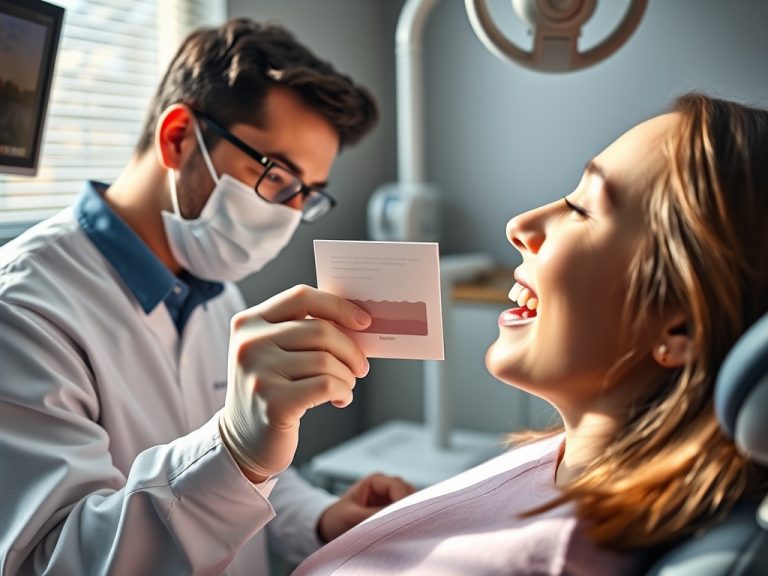
1. Your dentist reviews symptoms and risk factors, such as tobacco use, heavy alcohol use, prior oral lesions, HPV-related concerns, or a sore that has lasted more than two weeks.2. They inspect your lips, cheeks, gums, tongue, the roof and floor of your mouth, and the back of the throat as far as they can see.3. They may gently feel your jawline, neck, and the tissues inside your mouth to check for tenderness, swelling, firmness, or enlarged lymph nodes.4. If they see an area that needs follow-up, they may measure it, photograph it, note the exact location, and tell you when to return or which specialist should evaluate it.
NIDCR says the exam is painless and takes only a few minutes, which is why it is commonly folded into a standard preventive visit.
For a practical guide to cleaning between teeth after your exam, see Floss vs Water Flosser vs Interdental Brushes: Which Is Right for You?, which explains how dentists match different tools to different mouths.
Benefits, limits, and what screening cannot do
The main benefit is early detection of suspicious changes. Dentists are often the first clinicians to notice oral lesions because many areas of the mouth are hard for patients to inspect on their own.
Screening also has limits. A normal screening does not guarantee that a person has no cancer, especially in areas that are harder to see. A suspicious finding also does not mean cancer is present. Many lesions turn out to be irritation, infection, trauma, or benign tissue change. In other words, screening helps identify who needs the next step; it is not the same as a biopsy or a final diagnosis.
Planning Notes for Oral Cancer Screening Dentist
For most people, screening stays routine. Nothing unusual is found, your dentist documents the exam, and your visit continues as planned.
The path changes when there is a persistent ulcer, unexplained lump, tissue hardening, a lesion that bleeds easily, or a change that matches your symptoms. At that point a dentist may recommend a short recheck interval, additional imaging if something else is suspected, or referral to an oral surgeon, oral medicine specialist, or ENT specialist for biopsy and diagnosis.
If you are trying to weigh follow-up recommendations, our guide on how to compare two different dental treatment plans can help you organize questions for a second opinion.
Who should be especially proactive
Anyone can benefit from regular soft-tissue exams, but people with ongoing tobacco or nicotine exposure, heavy alcohol use, prior oral lesions, extensive sun exposure to the lips, or persistent mouth symptoms should be especially proactive. The American Cancer Society notes that oral cavity and oropharyngeal cancers are more common in men, with estimated lifetime risk around 1 in 59 for men and 1 in 139 for women in the United States.
Your home care still matters. Daily plaque control and close attention to any new sore, patch, or lump make it easier to notice changes between visits. For everyday cleaning choices, see our comparison of floss vs water flosser vs interdental brushes.
Routine visit or urgent evaluation?
Book a routine dental appointment if you are due for an exam, want a baseline screening, or have a mild tissue concern that has just appeared and seems linked to irritation, such as cheek biting.

Seek prompt dental or medical evaluation if you have a sore, lump, or red or white patch that lasts longer than two weeks, unexplained bleeding, trouble swallowing, persistent hoarseness, numbness, or a neck lump. Those symptoms do not prove cancer, but they do justify faster assessment.
Questions patients often ask during a screening visit
Do I need special symptoms to request screening? No. Most people have screening during routine care, and it is reasonable to ask your dentist to explain what they are checking even if you feel normal.
Does a screening use radiation? A routine oral soft-tissue screening does not. It is usually done by looking and gently feeling tissues. Any later testing depends on what is found.
Can I just self-check at home instead? Self-checks can help you notice a sore or lump sooner, but they are not a substitute for an exam by a trained clinician who sees oral tissues every day and can inspect areas that are difficult for you to visualize.
Mistakes to avoid after a normal exam
A normal screening result is reassuring, but it should not make you ignore a new symptom that appears between visits. A sore caused by irritation should still improve. If it does not, mention it.
Another mistake is assuming oral cancer risk applies only to older heavy smokers. Tobacco, alcohol, HPV-related disease, and sun exposure to the lips all matter, and some people with oral cancer do not fit a stereotype. The safest habit is to treat persistent change as worth checking.
What to remember before your next exam
An oral cancer screening is one of the simplest checks in dentistry and one of the easiest to overlook because it often happens quietly during a regular exam. If you have a persistent symptom or a personal risk factor, mention it directly so your dentist can document it, examine the area carefully, and explain the next step in plain language.
Before your screening appointment: add oral cancer screening to your routine dental exam checklist, and if a mouth sore or patch has not healed after two weeks, schedule an evaluation rather than waiting it out.